The Living Soil, Part 2: Earthworms

The founding theory of the Select Program is that “Healthy Soil creates a Healthy Lawn”. But what is “healthy soil”? Let's look at the factors that go into producing a healthy soil that benefits your grass and lets nature feed and protect your lawn.
Earthworms: Nature's Aerators
One of the first things you’ll notice if you dig in healthy soil is that is full of living things: beetles, sowbugs, ants, centipedes, grubs and other small animals populate the soil. In a healthy acre of land it is estimated the weight of the organisms in the top 6” of soil is between 2500 and 5000 pounds! The most iconic and important of these soil-dwellers may be earthworms.
Earthworms perform multiple functions that enrich and improve the soil. Their feeding activity pulls dead organic material from the soil surface into the soil. They also ingest soil particles that are used to grind the plant material into a paste.
The organic plant material and soil is combined with compounds from their gut and excreted as “castings”. Earthworm castings are an excellent source of humus, nitrogen, phosphorus, potassium, and calcium. Castings also contain bacteria which help decompose additional organic material.
Earthworms consume and excrete an estimated 20 to 40 tons of soil per acre per year. The castings combine organic material and mineral soil particles into a stable “aggregate” that improves soil texture. Earthworm castings are critical in developing topsoil.
They also help aerate soils. The tunneling activity of earthworms creates spaces for air in the soil, reducing soil compaction. As they travel in these tunnels their bodies create a piston effect that forces air and oxygen throughout the soil, helping soil to “breathe”. This is important because plant roots will not grow where there is no oxygen. Earthworm tunnels in the soil also help water infiltrate into the soil.
Think of earthworms as tiny workers invisibly tilling and aerating the soil the soil beneath your feet, at the same time providing “free” fertilizer. They are a critical component of healthy soil.
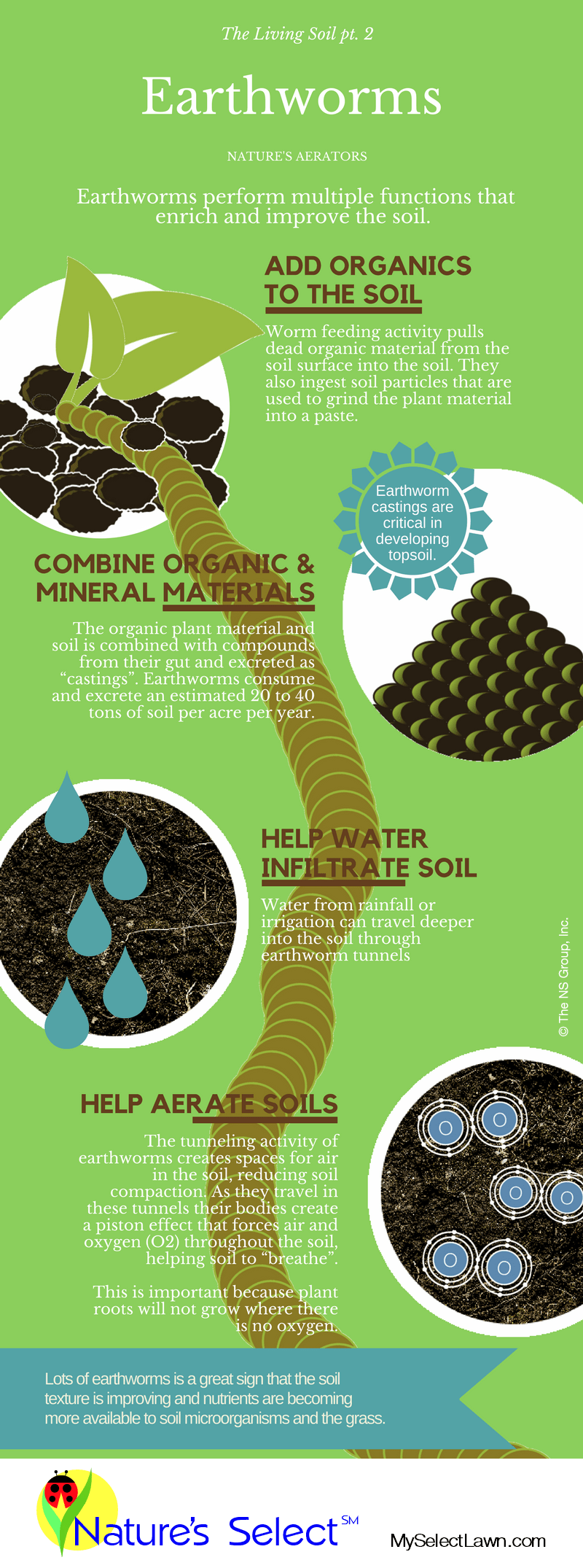
The Select Program helps to maintain a good environment for these tiny workers to build and improve your soil. One thing that our Select customers eventually notice is that their lawns start to contain a lot of earthworms. This is a great sign that their soil’s texture is improving and nutrients are becoming more available to the soil microorganisms and the grass.